
The Dutch Contribution: An Examination of the 2008 Spyker C8 Laviolette Up for Auction on Bring a Trailer
By Christopher M. Miller, Certified Automotive Appraiser
Published: March 28, 2026
The landscape of high-performance automotive engineering has been fundamentally reshaped over the last two decades. While the legacy German, Italian, and Japanese brands continue to dominate market share and consumer preference, an increasing number of collectors and enthusiasts are turning to niche European manufacturers for unparalleled exclusivity and engineering artistry.
One such outlier is Spyker Cars, a Dutch manufacturer whose brief but spectacular entry into the modern supercar market produced vehicles of extraordinary artistic and mechanical complexity. For aficionados of automotive engineering history, the impending auction of a 2008 Spyker C8 Laviolette on Bring a Trailer represents a significant event. This acquisition represents more than just the purchase of a limited-production sports car; it is an opportunity to own a piece of design history that bridges the gap between aeronautical heritage and contemporary supercar performance.
The Historical Context: The Return of Spyker
Spyker’s return to the automotive market in the early 21st century was a narrative steeped in history and aeronautical ambition. The original Spyker brand, founded in 1898 by Jacobus Spijker and his brother Hendrik Jan, achieved significant recognition in the early 20th century for producing advanced luxury automobiles and aviation engines during the First World War. The company’s motto, Nullius in Verba (Take no one’s word for it), reflected a commitment to innovation and empirical testing.
After a period of decline and bankruptcy during the 1920s, the Spyker marque remained dormant for over 70 years until its revitalization by Victor Muller in 2000. Muller’s vision was ambitious: to create high-performance vehicles that were conceptually different from the mainstream supercars of the era. Drawing directly from the company’s aeronautical past, Muller infused his new automobiles with elements of historical aircraft engineering, creating a signature aesthetic that was immediately recognizable and polarizing.
The C8 Laviolette, introduced in 2005, represented the culmination of this vision. It was conceived as a purist’s supercar—a lightweight machine focused on driver engagement, visceral feedback, and mechanical artistry rather than electronic driver aids. In a market increasingly saturated with digital interfaces and performance-enhancing software, Spyker offered an almost analog experience, a return to mechanical intimacy that appealed to a segment of the market that valued craftsmanship over lap times.
The Anatomy of the C8 Laviolette: A Masterclass in Automotive Design
The 2008 Spyker C8 Laviolette is a vehicle defined by its aesthetic uniqueness. While often compared to Ferraris or McLarens of the era due to its mid-engined layout and performance credentials, the Spyker possesses a visual identity that remains distinct.
Exterior Design:
The most striking feature of the C8 Laviolette is its distinctive silhouette. The bodywork is constructed primarily from lightweight aluminum, contributing to the car’s overall agility. The exterior is characterized by a series of sculpted lines and polished metal details, including the trademark “blade” or “nacelle” styling that evokes aircraft wing spars. The front end features a distinctive grille and swept-back headlights, while the rear is dominated by a diffuser and dual central exhaust outlets.
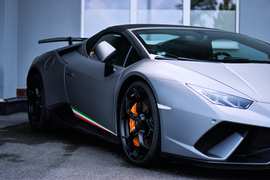
The Laviolette variant distinguishes itself from the Spyder by featuring a fixed roof with a tinted glass canopy, offering enhanced structural rigidity and a unique panoramic driving experience. This design choice not only enhances the car’s aesthetic appeal but also provides practical benefits for all-weather driving and interior comfort.
Interior Engineering and Ergonomics:
The interior of the C8 Laviolette is where Spyker’s design philosophy truly manifests. Unlike many of its contemporaries, which focused on minimalist, driver-focused cockpits, Spyker embraced a highly detailed and luxurious environment. The dashboard is a masterpiece of engineering, featuring intricate chrome trim, precision-machined controls, and aviation-inspired instrumentation.
The steering wheel is a significant design element. It features a flat bottom, an aeronautical four-spoke design, and premium leather wrapping. This configuration provides a sporty feel and enhances driver visibility of the instrument cluster. The gauge cluster itself is a focal point, typically featuring analog dials with chrome bezels that mimic the instrumentation of historic aircraft. The inclusion of the ‘Nullius in Verba’ motto on the tachometer serves as a subtle reminder of the company’s heritage and commitment to engineering excellence.
The gear shifter is another standout feature. Its exposed, pivoting linkage around a central chromed rod is a mechanical work of art, reminiscent of vintage aircraft throttle controls. This mechanical complexity is a deliberate design choice, offering a visceral and tactile connection between the driver and the engine, providing an experience that many modern automatic transmissions cannot replicate.
The Powertrain: A Symphony of Italian Engineering
While Spyker is renowned for its innovative chassis and bodywork, its commitment to performance is underpinned by a robust powertrain sourced from Audi. The C8 Laviolette is equipped with an Audi-sourced 4.2-liter V8 engine. This engine, known for its reliability, linear power delivery, and beautiful sound, was a natural fit for the Spyker C8.
In the C8 Laviolette application, the 4.2-liter V8 typically produces approximately 400 horsepower. This power output, combined with the car’s lightweight construction, ensures strong acceleration and responsiveness. The engine is paired with a six-speed manual transmission, a nod to the purist ethos of the vehicle. The Getrag gearbox provides crisp, precise shifts, allowing drivers to fully engage with the mechanical nature of the machine.
The overall performance of the C8 Laviolette is characterized by its smooth, linear power delivery and engaging driving dynamics. While it may not match the absolute top-end acceleration of contemporary hypercars, it offers a more rewarding and involving driving experience that prioritizes connection and feel over brute force.
The Economics of Automotive Investment: The 2008 Spyker C8 Laviolette
In the context of the collector car market, automotive investments are increasingly recognized as alternative asset classes that offer potential for appreciation, liquidity, and diversification. For collectors of niche sports cars, the decision to purchase a specific model is influenced by several critical factors, including rarity, historical significance, engineering complexity, and condition.
Rarity and Exclusivity:
The C8 Laviolette is a limited-production vehicle, and its scarcity adds significantly to its appeal. The exact production numbers vary depending on the specific variant and market configuration, but the C8 Laviolette is one of the rarest versions of the C8 series. This exclusivity protects the vehicle from the depreciation that affects high-volume production sports cars. Collectors are often willing to pay a premium for vehicles that represent a small piece of automotive history, and the Spyker C8 Laviolette fits this description perfectly.

Market Dynamics and Appreciation:
The collector car market has shown strong resilience, particularly in the segment of European niche sports cars. While the values of more common performance vehicles may fluctuate with economic conditions, models like the C8 Laviolette have the potential for long-term appreciation. Factors driving this appreciation include:
Scarcity: Lower production numbers invariably lead to higher long-term values.
Engineering Uniqueness: The complexity and craftsmanship of the Spyker C8 Laviolette make it desirable to collectors who value artistry over pure speed.
Collector Sentiment: As the automotive landscape shifts towards electrification, vehicles with naturally aspirated engines and manual transmissions are becoming increasingly sought after by enthusiasts seeking to preserve the visceral driving experience of the gasoline era.
The Cost of Entry:
For collectors considering an investment in a vehicle such as the 2008 Spyker C8 Laviolette, the purchase price is only one part of the total cost. It is essential to factor in ongoing maintenance, insurance, and potential restoration costs.
Purchase Price: The cost of a 2008 Spyker C8 Laviolette varies depending on its condition, mileage, and specifications. The auction listing on Bring a Trailer provides a clear indication of the current market value for a vehicle in this condition. Collectors should budget for a premium to secure a pristine example.
Maintenance Costs: Spyker is a low-volume manufacturer, meaning that specialized parts may be difficult to source. Routine maintenance and servicing should be performed by experts with experience in Spyker vehicles. A specialist assessment of maintenance history is critical before purchasing to avoid unexpected repair costs.
Insurance: Due to its limited production and high value, the C8 Laviolette typically requires specialized insurance coverage, which can be more expensive than standard automotive insurance.
Evaluating This Specific Example: The 2008 Spyker C8 Laviolette
The 2008 Spyker C8 Laviolette being offered for auction on Bring a Trailer represents a compelling opportunity for collectors seeking a rare and iconic vehicle. To assess its value, we must consider its condition, provenance, and mileage.
Condition and Mileage:
This specific C8 Laviolette has accumulated approximately 1,600 miles. This remarkably low mileage suggests that the vehicle has been lightly used and is likely in excellent mechanical and cosmetic condition. Lower mileage in high-end sports cars typically correlates with higher resale value and reduced maintenance needs.
Service History and Updates:

The vehicle has reportedly benefited from an overhaul by Jasper den Dopper, a well-known Spyker specialist. This service included the replacement of perishable components such as weatherstripping and dampers, as well as a refresh of the ignition system. These updates