The 2027 Corvette Stingray: A Deeper Dive into Performance and Durability Enhancements
The C8 Corvette Stingray has successfully redefined what America’s sports car represents. Since its introduction, it has consistently challenged global competitors in the mid-engine performance arena, a sector once dominated by legendary European marques. For seven years, the Stingray utilized the LT2 V8 engine—a 6.2-liter powerhouse with direct fuel injection that generated up to 495 hp and 470 lb-ft of torque. Now, Chevrolet is poised to upgrade the base model and the Z51 package with a new, more robust V8 engine, though internet speculation about a manual transmission is premature, as Chevy continues to rely on its advanced dual-clutch automatic transmission.
Understanding the 2027 Chevrolet Corvette Stingray: A Performance Evolution
The current LT2 pushrod V8 has served the Corvette faithfully, but its replacement signals a significant shift in powertrain strategy. The new engine not only boosts performance but also marks the return of the iconic “LS” moniker, a designation that has resonated with automotive enthusiasts for decades.
This isn’t a throwback to the classic LS engines familiar to hot rodders and dune buggy builders. Chevrolet has introduced the LS6, which derives its numerical designation from its position as the sixth-generation small-block V8. While the LT6 is already in use for the Corvette Z06’s 5.5-liter flat-plane crank V8—an entirely different engine architecture—the LS6 will re-establish gasoline V-block engine production in Flint, Michigan. This manufacturing capability was previously discontinued in 2020 when the “High Feature” 3.6-liter V6 ceased production. The new LS6 will also be found under the hood of the new 2027 Corvette Grand Sport.
Analyzing the Technical Differences: LT2 vs. LS6
The new V8 engine delivers a substantial increase in power and torque, climbing to 535 hp and 520 lb-ft—a gain of 40 horsepower and 50 lb-ft. This performance leap is primarily attributable to a longer stroke of 3.94 inches (compared to the LT2’s 3.62 inches), which expands the displacement from the LT2’s 6.2 liters (376 cubic inches) to 6.7 liters (409 cubic inches). This engine redesign also raises the compression ratio from 11.5:1 to 13.0:1.
Performance implications: Higher compression ratios generally enhance engine efficiency by maximizing the energy extracted from each combustion cycle. However, they demand higher-octane fuel to prevent knock, potentially increasing operating costs for owners. The increased displacement contributes directly to higher torque output, especially at lower RPMs, providing a stronger sense of immediate acceleration.
A new intake manifold featuring a tunnel ram design feeds air into the engine through a larger throttle body and high-velocity ports. This updated engine incorporates both direct injection and traditional port injection. Under low-load and part-throttle conditions, port injection helps reduce particulate emissions and mitigate carbon buildup on intake valves. In contrast, direct injection systems can allow small particles from the positive crankcase ventilation (PCV) system to accumulate on the back side of the valves, reducing airflow and performance over time. Port injection acts as a cleansing agent, washing the valves to reduce—though not eliminate—soot accumulation.
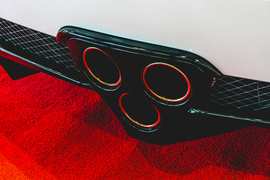
Exhaust system options: The new LS6 system offers two exhaust configurations. The standard setup features four exhaust tips, two positioned on each side of the rear bumper. The optional system also utilizes four tips, but all four exit from the center of the rear bumper. Both systems incorporate active valving for sound control, though there is no longer a power difference between the two options, despite their distinct acoustic signatures.
Managing engine noise in a performance vehicle involves balancing auditory experience with legal and comfort requirements. Dual-mode exhaust systems, like the one offered on the LS6, allow drivers to switch between aggressive, track-focused sound profiles and quieter modes suitable for daily driving. For buyers considering a sports car that may double as a daily driver, understanding the NVH (Noise, Vibration, and Harshness) characteristics of the exhaust system is crucial for long-term satisfaction.
Z51 Package Upgrades: Enhancing Handling and Aerodynamics
For enthusiasts looking to sharpen the handling and overall performance of the 2027 Corvette Stingray, the Z51 package has undergone significant revisions. The first improvement is the new final drive gearing, optimized for acceleration, now set at 5.56:1 compared to the previous 5.17:1 ratio. The 2027 Z51 also adopts Michelin Pilot Sport S5 tires, an evolution of the 4S rubber that was previously supplied with the package. The Z51’s rear wing has been refined to enhance high-speed stability, and the chassis has been retuned to match the additional grip and increased engine output. While full specifications have not yet been released, both coupe and retractable hardtop convertible body styles will continue to be available.
Z51 package cost and value: The Z51 package is an essential upgrade for buyers seeking track-capable performance. While it adds a significant cost to the vehicle’s base price, the performance gains in terms of acceleration, braking, and handling justify the investment for enthusiasts who intend to utilize the car’s full capabilities. For buyers who prioritize comfort and daily usability, the standard Stingray may suffice, offering a significant performance advantage over traditional grand tourers at a fraction of the cost.
Strategic Buying Considerations: Should You Buy, Wait, or Rent/Invest?
The decision to purchase a new performance car like the Corvette Stingray is a complex financial decision. While the excitement of owning a powerful and luxurious vehicle is compelling, buyers must weigh the cost of depreciation, insurance, and maintenance against the benefits of ownership. For buyers seeking high performance without the long-term commitment and depreciation risks of ownership, options like performance driving experiences or track rental programs can offer similar thrills at a lower cost.
Performance car ownership economics: The total cost of ownership extends beyond the initial sticker price. Buyers must factor in high-performance tires, which can wear quickly under aggressive driving, as well as insurance premiums, which are often significantly higher for sports cars than for standard sedans. Regular maintenance, especially for a high-performance engine with increased compression and displacement, also adds to the long-term cost.
Best Financial Strategies for Enthusiasts (2027)
For buyers considering the 2027 Corvette Stingray, the following financial strategies can help optimize the purchase and maximize value:
Evaluate ownership vs. experience: Determine whether the benefits of owning a Corvette justify the associated costs. If the car is primarily intended for track use, consider rental options or driving experience programs instead of purchasing. This allows drivers to experience high-performance driving without the burden of depreciation and long-term maintenance.
Understand warranty coverage: The Corvette Stingray comes with a robust warranty, but buyers should fully understand what is covered and what is excluded. Certain high-performance modifications or track-related damages may void the warranty, leaving the owner responsible for costly repairs.
Research insurance options: Obtain multiple quotes for insurance coverage before purchasing the vehicle. Sports car insurance rates can vary significantly, and buyers should compare rates from different providers to ensure they are getting the best possible price.
Compare different trim levels: The Stingray offers various configurations and performance packages. Buyers should compare the costs of different trim levels to find the best balance of performance and affordability.
Mistakes to Avoid That Could Cost You Money
When purchasing a high-performance sports car, buyers often overlook hidden costs that can significantly impact the total cost of ownership. Making the following mistakes can lead to substantial financial losses:
Underestimating ownership costs: Many buyers focus solely on the purchase price and neglect to factor in the costs of maintenance, insurance, and tire replacement. These costs can add up quickly and significantly increase the total cost of ownership.
Skipping performance packages: The Z51 package offers significant performance enhancements, but many buyers choose the standard model to save money. This decision can lead to disappointment when the car fails to meet performance expectations, resulting in a desire to purchase additional upgrades later—often at a higher cost than if the package had been purchased initially.
Neglecting warranty coverage: Failing to understand the warranty coverage can result in costly repairs for modifications or track-related damages. Buyers should always read the fine print and understand what is covered before making a purchase.
Why the “LS” Return is a Smart Move for Chevrolet
The introduction of the LS6 engine is a calculated move that signals Chevrolet’s commitment to performance, durability, and market relevance. By returning to the LS moniker, Chevy connects with the enthusiast community, leveraging a name that is synonymous with American power and reliability. The technical enhancements of the LS6 provide a significant performance boost while addressing potential durability issues that have plagued some high-performance engines.
Corvette lineup growth: The C8 has expanded dramatically since its debut. From the exclusive ZR1 and ZR1X models to the Z06 and the new 2027 Grand Sport and Grand Sport X, the Corvette lineup offers an unprecedented range of capabilities and options. This broad lineup ensures there is a Corvette for every buyer, whether they prioritize raw performance, luxury, or value.
Future Outlook: Pricing, Availability, and Market Impact
While precise pricing and final specifications for the 2027 Chevrolet Corvette Stingray have not yet been released, the market anticipation is palpable. With expected pricing around $75,000, the Stingray continues to offer a compelling value proposition in the sports car segment. The increased performance, updated styling, and improved durability ensure that the Stingray