The Great Color Reset: What the Next Decade of Automotive Hues Means for Buyers and Collectors
The parking lots across America tell a visual story that is both predictable and, for the moment, slightly monotonous. Dominated by the steadfast quartet of white, black, silver, and gray, the modern automotive palette has settled into a comfort zone of neutrality. After years of technological consolidation and economic uncertainty, buyers have gravitated toward safety, choosing colors that promise stability and resale value. But as an industry veteran with over a decade immersed in the world of automotive styling and market analysis, I can tell you that this monochromatic era is approaching its tipping point. The data emerging from leading global suppliers like PPG and BASF, combined with the insights from the Pantone Color Institute and automotive design houses, points not toward stagnation, but toward a dramatic resurgence of color in the next five to ten years.
This shift is more than just a fleeting aesthetic whim; it represents a fundamental evolution in how consumers connect with their vehicles, driven by powerful underlying forces of cultural optimism, technological innovation, and our evolving relationship with the natural environment. Understanding these trends is critical for anyone considering a new car purchase, a fleet investment, or long-term car ownership, as color choice directly influences desirability, resale potential, and the very experience of driving in the digital age. The automotive color trends of 2026 and beyond signal a departure from the safe and familiar, ushering in an era of personality-driven design.
The Science of Safety: Why Grayscale Dominates Today’s Auto Market
To fully appreciate the coming shift, we must first dissect the current reality. The dominance of white, black, and gray in the new car market is not an accident; it is a perfectly rational response to complex economic and behavioral factors. In a market where the average price of a new vehicle has climbed to unprecedented heights—often hovering around the $50,000 mark—the car has transformed from a disposable commodity into a significant financial investment. When consumers are spending tens of thousands of dollars on an asset that depreciates rapidly, the primary motivation is often minimizing risk.
Psychological Inertia and Resale Value
From a psychological perspective, gray vehicles represent the pinnacle of safety and reliability. Gray and silver are perceived as sophisticated, modern, and clean—attributes that align with the perception of advanced technology and engineering. White, traditionally associated with technology and purity, appeals to buyers looking for a timeless and elegant aesthetic. Black conveys power, luxury, and authority. For the average car shopper, these neutral tones are considered the path of least resistance. They do not polarize opinions, and importantly, they have a proven track record in the secondary market.
Major automotive manufacturers and dealerships understand this dynamic intimately. Neutral colors are easier to produce in bulk and appeal to the broadest possible segment of buyers, increasing the probability of a quick resale at a predictable value. The fear of being stuck with an unpopular color is a powerful deterrent for many consumers, leading to a self-reinforcing cycle where neutral colors become popular because they are popular.
The Economics of the Fleet
This cautious approach is amplified in the commercial sector. Fleet managers, who prioritize long-term total cost of ownership, consistently choose white and silver vehicles because they require less maintenance, appear cleaner longer, and are the most universally acceptable colors for resale to third-party buyers. Even in high-performance markets, white cars dominate auction blocks because buyers are looking for a platform that can be customized or easily resold, not a statement piece.
This cycle has led to what many industry observers call an era of automotive “blandification.” While consumers increasingly seek personalization in their clothing, technology, and living spaces, the automobile has lagged behind, tethered to the constraints of resale value and production efficiency. As an industry insider, I have observed how this tension plays out in design studios and showrooms every day: designers push for more expressive palettes, but sales forecasts and manufacturing timelines often dictate a return to the safe bet.
The Historical Cycles of Automotive Color
Color trends in the automotive industry are rarely linear. Instead, they follow cyclical patterns, often reflecting the broader cultural mood of the era. The vibrant pastel palette of the 1950s, characterized by hues like turquoise, salmon pink, and mint green, was a direct expression of post-war exuberance, optimism, and an embrace of the American Dream. Cars were status symbols designed to attract attention and express individuality.
Similarly, the automotive boom of the early 2000s saw white emerge as a dominant force. This coincided with the rise of glossy white consumer electronics, popularized by the launch of the original iPod and the iMac. White was perceived as futuristic, clean, and high-tech. This trend demonstrated how external technological influences can directly shape the automotive palette, as buyers sought to align their vehicles with the cutting edge of design.
However, these historical cycles also show how trends fade. As the novelty of white wore off and concerns about its practicality (e.g., being hard to clean, lacking contrast) became more apparent, the industry began to transition back toward more neutral tones. The recent period of economic uncertainty, marked by the 2008 financial crisis, the COVID-19 pandemic, and persistent inflation, has reinforced this shift toward caution and risk aversion.
The Global Shift: Europe Leads the Charge
While the North American market has leaned heavily toward neutrals, the landscape is far more diverse globally. European markets have traditionally embraced a wider range of colors, and the latest data indicates they are leading the charge toward more expressive and nature-inspired hues.
According to the latest automotive color trends, the most significant shift worldwide is the rise of green. This isn’t just a minor variation; green has become the most dynamic chromatic mover globally, as observed by Gloria Jover of the Pantone Color Institute. This surge is not isolated to a specific region. While Europe is at the forefront, significant growth in green is also being seen in North America and Asia.
For automotive manufacturers, this shift represents both an opportunity and a challenge. Adapting production lines to introduce new colors requires significant investment in research and development, as well as adjustments to existing paint formulations. However, the financial upside is substantial: cars with expressive, on-trend colors often achieve higher resale values and attract a more engaged demographic of buyers.
The Top Emerging Colors of 2026 and Beyond
The most exciting automotive color trends emerging for the next five years focus on colors that are connected to nature, technology, and personal expression. Instead of moving toward traditional primary colors like blues and reds (which are currently showing declining popularity), consumers are gravitating toward hues that evoke a sense of authenticity, optimism, and individuality.
The Rise of Green: From Earthy to Earth-Friendly
The dominant color trend is undoubtedly green. However, this isn’t the dark green of vintage sedans. Instead, the market is moving toward lighter, more expressive shades. Misty Yeomans, automotive color and styling manager at PPG, notes the increasing appeal of minty and willowy light greens. These soft, organic colors are often marketed as \”eco-friendly\” or \”nature-inspired,\” aligning with consumer desires for sustainability and a connection to the outdoors.
These greens signal individuality and a desire to break away from the monotony of grayscale. They are frequently seen on SUVs and crossovers, vehicles that are often marketed with imagery of outdoor adventure and exploration. By choosing a green vehicle, drivers feel they are aligning themselves with these values. The trend is also supported by advances in paint technology, which make it easier to achieve matte and metallic finishes in these softer tones.
Violet: The Otherworldly Hue
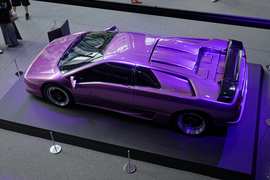
Another intriguing trend is the emergence of deep violets. This color has long been associated with luxury, royalty, and creativity. In the current market, however, violets are being influenced by a new cultural phenomenon: the renewed interest in space exploration and technology.
Yeomans points to an \”intergalactic look\” that is gaining traction. These are often purplish-blues that shift to black or have a star-like sparkle. This aligns with our technological fantasies for exploration and escape. Manufacturers are capitalizing on this trend with unique paint offerings. Dodge, for example, has launched colors like Purple Haze and After Dark on its new Charger, tapping into the allure of the unknown and the premium feel of these otherworldly finishes.
The Warmth of Orange
Orange is also experiencing a resurgence, moving away from the vibrant orange of the 1970s toward more sophisticated, \”atmospheric\” shades. This trend is partially driven by the ongoing popularity of golden hour selfies, but also by a deeper psychological association with nature and adventure.
Gypsy Modina, principal designer of color, material, and finish at Honda, notes that oranges conjure rock formations and are inspired by the courageous, energetic feel of technical outdoor apparel. Honda’s Sunset Orange on the Passport TrailSport SUV is a prime example of this trend, aligning the vehicle with adventurous spirit and a connection to the natural world. This shade speaks to a desire for a car that feels both capable and visually striking, reflecting the owner’s personality and lifestyle.
The Influence of EVs and AI on Automotive Aesthetics
The rise of electric vehicles (EVs) is fundamentally reshaping automotive aesthetics. While EV adoption has slowed recently, their influence on design remains significant. As manufacturers race to develop compelling electric vehicles, they are using color to differentiate their products and communicate core values such as innovation, efficiency, and sustainability.
Sophisticated Smoked Neutrals
In the EV segment, we are seeing the rise of \”smoked neutrals.\” These are not traditional grays, but rather grays infused with subtle chromatic undertones—often greenish or brownish tints. Jover notes that these colors allude to moods typically associated with quiet luxury and technological sophistication. The olive used to launch Jeep’s upcoming Recon electric off-roader